Bench note No. 5

Find Every Shutoff, Then Work the Main Like a Pro
How a pro works a main water shutoff: the turn count, the packing nut, the dropped gate, never halfway, and the quarter turn back from open.

Panel 1. The Old Tradesman says: Round wheel on the main? That's a gate valve. Close it slow and count the turns, open to closed, and write the count on the tag. Opening it back up: all the way, then back a quarter turn so it can't seize up there.

Panel 2. The Old Tradesman says: A lever on the main is a ball valve. A quarter turn, and across the pipe is closed. Slam it and you get water hammer. Back on, WSSC says crack it an eighth of a turn, wait for the noise to quit, then open it full.

Panel 3. The Old Tradesman says: Wheel won't turn? No cheater bar. The packing's squeezing the stem. Back the packing nut under the wheel off a quarter to half a turn. That's Crane's number. Work the valve, then snug that nut back.

Panel 4. The Old Tradesman says: Never force an old one. Crud can jam the gate shut, and the stem is screwed into the gate like a bolt. Crank the wheel to open it and the stem unscrews. Wheel turns, no water. That's a dropped gate.

Panel 5. The Old Tradesman says: A little weep at the stem after you work it? Snug the packing nut an eighth of a turn at a time till it stops. Crank it and you can crack the valve.
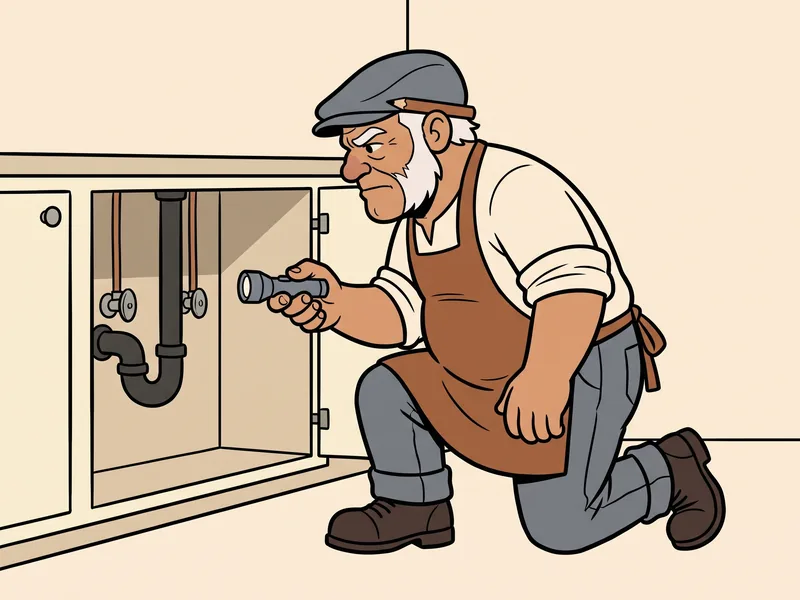
Panel 6. The Old Tradesman says: Then every stop under the sinks and behind the toilets. On or off, never halfway. BrassCraft prints that on its sheet. A stop that ends a line gets a cap on its outlet. One bumped handle and the cabinet's full of water.
The note
Denver Water says the main is usually in the basement or crawl space, on a wall facing the street. In a slab house, WSSC Water says look near the water heater or under the kitchen sink. A lever is a ball valve: a quarter turn, and WSSC says turn it back on extra slow, half of that quarter turn first, then all the way once the noise of the pipes filling quits. A round wheel is a gate valve, which WSSC says closes clockwise and may take two or more full turns; back on, half a turn first. The gate valve is the one with the tricks.
Count it. The Environmental Finance Center Network tells small water systems to work valves slowly and steadily, because fast turns cause water hammer, to count the turns from open to closed and compare with the last record, to watch for grinding, sticking or unusual resistance, and to stop and write it down if a valve resists. That is a utility habit, and it scales down to one house fine. The count goes on the tag. On an old gate, take the count the next time you have to shut it anyway, not for practice.
Hard to turn? Crane’s sheet for its bronze gate valves says loosen the packing nut a quarter to a half turn, operate the valve, then retighten the packing nut. The packing squeezes the stem. Ease it and your effort goes to the threads.
Never force an old one. Plumber Magazine explains why: buildup on the gate can jam it in the valve when you close it, and the stem is screwed into the gate like a screw. Turn the wheel to open it again and you unscrew the stem, and the gate stays put. Plumbers call that dropping a gate, and the valve gets replaced. So close it very slowly, and if the water gets down to barely moving, make your repair with that.
A weep at the stem afterward gets a nudge. Family Handyman says an eighth to a quarter turn on the packing nut, then an eighth at a time, and warns that overtightening can crack the valve or crush the washer inside. Crane allows about a quarter to a half. The sheet that came with your valve wins; no sheet, start with the eighth. Run the main and the stops full open or full closed; Crane says it for gate valves and BrassCraft prints it on its stop instructions, along with a cap on any stop that ends a line. Open a gate valve slow, all the way, then back about a quarter turn; the Environmental Finance Center Network says that keeps it from seizing open. Never on a lever: a quarter back on a ball valve shuts it. Crane says to keep the stem off the backseat once it is open, so the packing does the sealing.
If you will leave the water off and drain the pipes, WSSC says shut off power to an electric water heater first, or turn a gas one down to pilot.
Found your main and it fights you? Easing the packing nut, the dropped gate and which way a globe valve goes are in the tips library: Valves that have to work.
References
- Crane, Bronze Gate Valves: Installation, Operation and Maintenance
- Plumber Magazine, Tips on installing and servicing gate valves
- Environmental Finance Center Network, Valve Exercising Best Practices for Small Water Systems
- Family Handyman, Leaky Shut-Off Valve? Here's How to Fix It
- BrassCraft, Water Supply Stops installation instructions
- WSSC Water, Find and Operate Your Main Water Valve
- Denver Water, Tips to prevent (and thaw) frozen water pipes in your home
- This Old House, Adding Sink Shutoff Valves: A DIY Guide
The technique in this note comes from these sources. He is the voice. They are the authority. The panels are cartoons, not photographs.