Bench note No. 4

Read the Old Part Before You Throw It Out
What a worn faucet stem tells you about the leak, and about the part to buy.
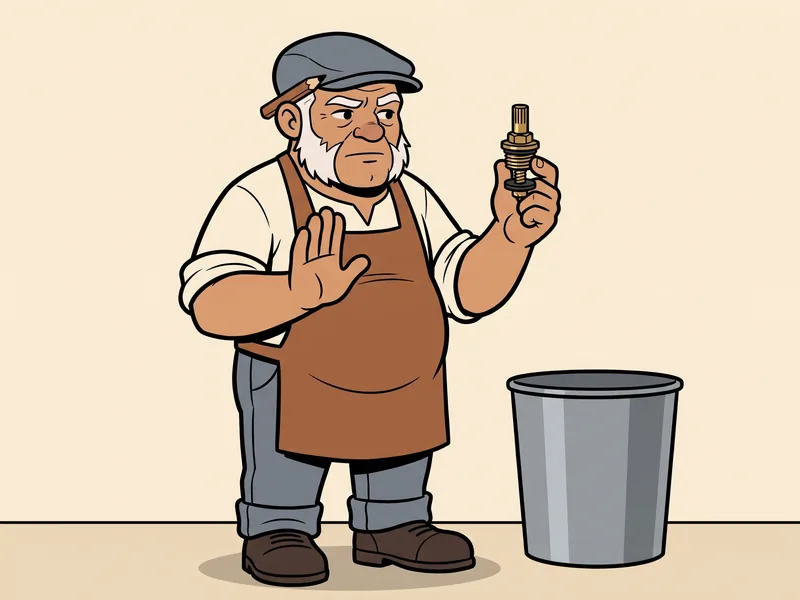
Panel 1. The Old Tradesman says: Hold it. That old stem knows more about your faucet than you do.
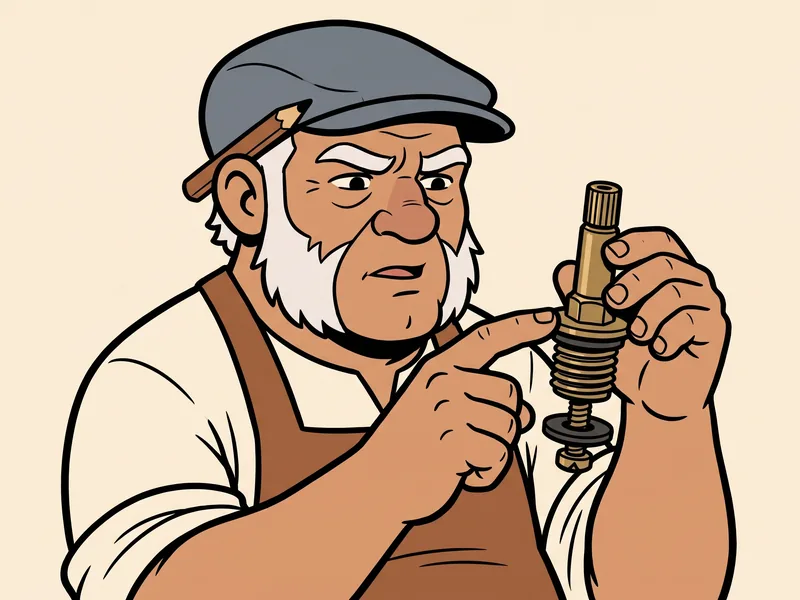
Panel 2. The Old Tradesman says: Top to bottom: teeth for the handle, threads, a washer and a screw. Count the teeth.
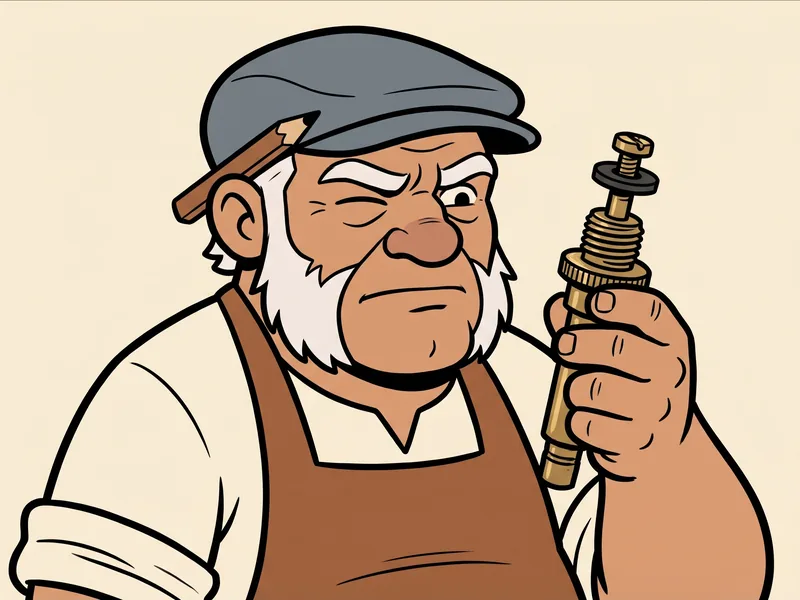
Panel 3. The Old Tradesman says: Washer squeezed flat, or a groove worn in it? There is your drip. Now go look at the seat it sat on.
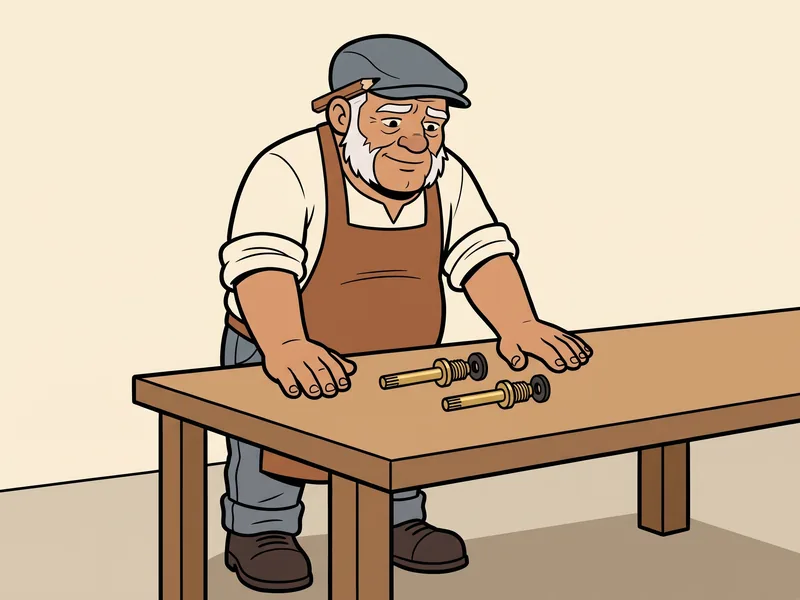
Panel 4. The Old Tradesman says: Old one beside the new one. Same size, same threads, same teeth. If it is not a twin, it goes back.

Panel 5. The Old Tradesman says: It comes with me. The counter will ask what you have, and “the broken one” is not an answer.
The note
Shut the water off and open the faucet before a stem comes out. Then, before the old stem goes in the trash, read it. It is the only witness you have.
Start at the top. The ring of teeth where the handle sits is the broach, and Danco tells you to count those splines, because their count and shape are part of how a stem gets matched. Family Handyman says a loose faucet handle will gradually grind away the valve stem, so if those teeth are chewed up, the handle was probably loose for a while. Hot and cold are not always the same part, either. Danco marks its stems hot, cold or both, so keep track of which side yours came out of.
Now the bottom. A seat washer that is squeezed flat, or has a groove worn in it, is what Danco says to look for, and the cure it gives is a new washer and a new seat. If you change the washer and the faucet still drips, This Old House points at the seat: it may be pitted, and it needs grinding smooth with a seat dresser. Danco’s cure is a new seat. A new washer on a damaged seat is a short story.
Then the middle. Water at the handle instead of the spout points to the O-ring, or to a packing nut that has worked loose. A handle that turns stiff points to mineral buildup, corrosion or a worn stem.
Then take the stem with you to the store. Family Handyman calls taking the worn parts along the safest bet, and so do I. If you would rather look it up first, our sister site Stems & Cartridges keeps an index for matching a stem by its numbers.
References
- Danco, Plumbing 101 for Beginners
- Danco, How to Match Your Broach with the Stem Finder Tool
- Danco, How to Repair a Leaky Two-Handle Faucet
- Danco, How to Repair a Leaky Two Handle Faucet with a Cartridge-Type Stem
- This Old House, Fixing a Leaky Faucet
- Hydro-Québec, How to repair a leaky faucet
- Family Handyman, Easy Plumbing Repairs (PDF)
- Family Handyman, How to Simply Fix Loose Faucet Handles
- This Old House, How To Repair a Shower Valve Stem
- Family Handyman, How to Fix a Leaking Bathtub Faucet
The technique in this note comes from these sources. He is the voice. They are the authority. The panels are cartoons, not photographs.