Bench note No. 9

No Ratchet Cutter on Cold CPVC
Cutting CPVC in the cold by the makers' sheets: why a ratchet cutter cracks it below 50 degrees F, what to cut with instead, and how far past a crack to cut back.
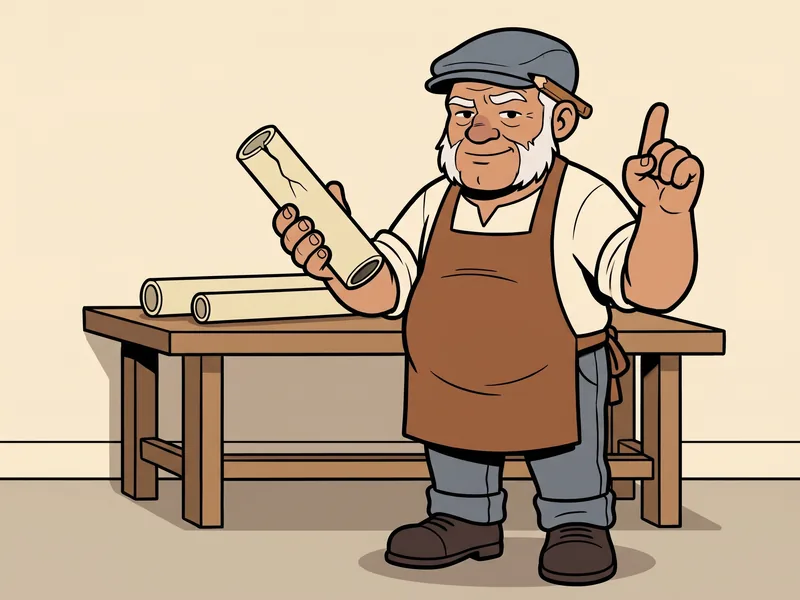
Panel 1. The Old Tradesman says: CPVC in a cold garage cracks easy. Wavin's sheet puts the NEVER in capitals: a ratchet cutter should NEVER be used below 50 degrees F.
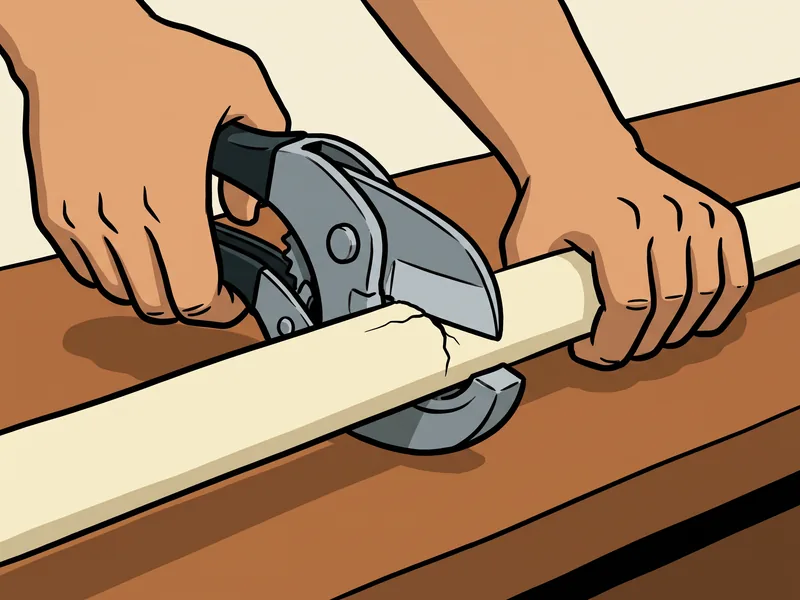
Panel 2. The Old Tradesman says: A ratchet cutter squeezes the pipe as it cuts. Lubrizol says that squeeze raises the risk of cracking cold CPVC. A dull blade leaves fine cracks too.
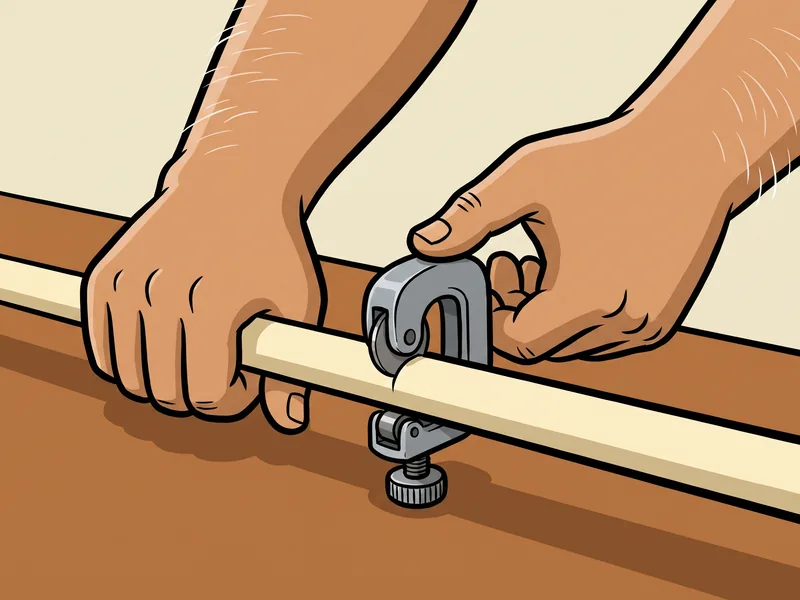
Panel 3. The Old Tradesman says: Cold day? A wheel cutter with a blade made for plastic. Lubrizol calls that the preferred way. If it raises a little bead at the end, file it off.
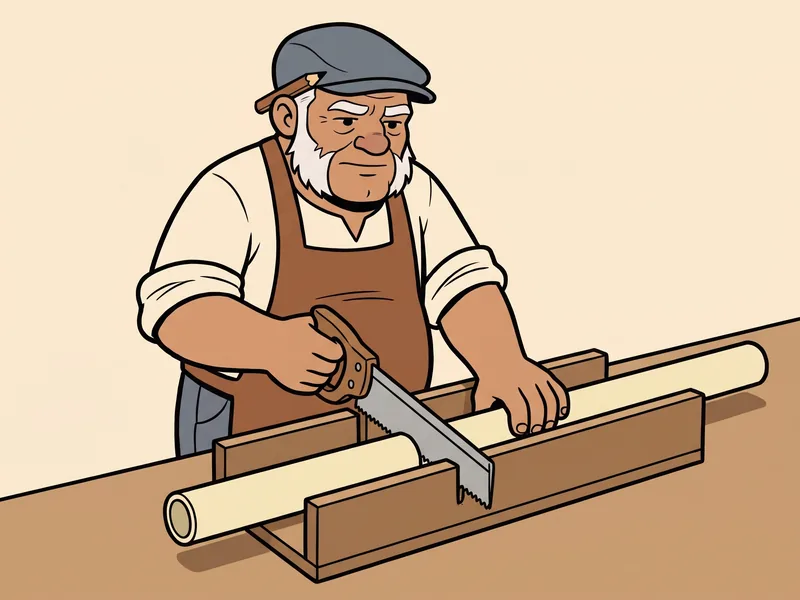
Panel 4. The Old Tradesman says: No wheel cutter? Fine tooth saw in a miter box. The box keeps it square, and a square end gives the joint its best bonding area.

Panel 5. The Old Tradesman says: Now read the end. Every cut, before and after, Lubrizol says. Run your chamfer tool around it: Charlotte says it can catch on a crack your eye missed.
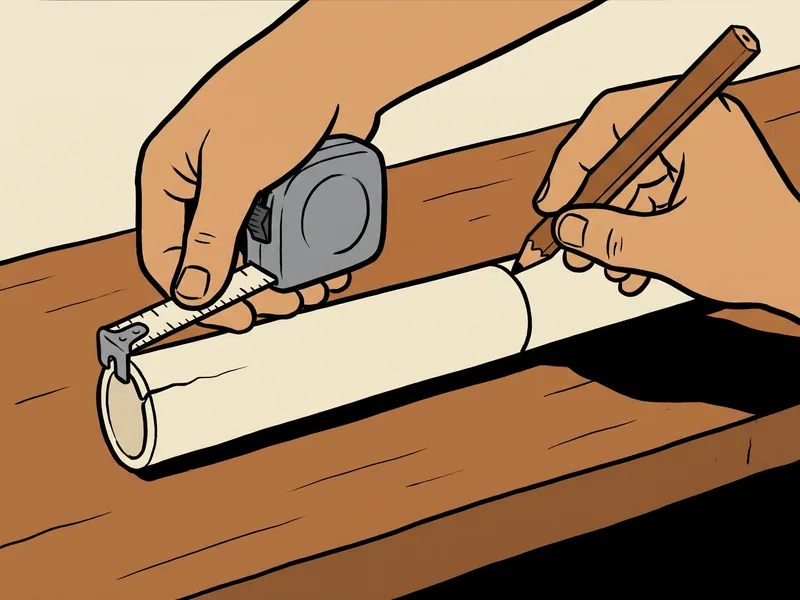
Panel 6. The Old Tradesman says: Crack? Find where it ends and mark two inches past that. Wavin prints that one in capitals too. Cut, then read the new end again.
The note
CPVC is the cream colored water pipe in a lot of houses, and it does not like the cold. IPEX says cold cuts the impact resistance and flexibility of PVC and CPVC. Lubrizol’s Corzan team says low temperatures can make it brittle enough to crack under pressure when you cut it, and Corzan says a ratchet cutter compresses the pipe, which raises the risk of cracking it. So Wavin’s FlowGuard Gold guide says a ratchet cutter should never be used when the air is below 50 degrees F, and Lubrizol’s BlazeMaster guide says use one only at 50 or higher, with sharp blades. Lubrizol’s FlowGuard FAQ adds that dull or damaged ratchet cutters cause fine cracks too, and its cutting page says no ratchet cutter at all when you are connecting to an old line.
What to cut with instead. Lubrizol’s FAQ calls a circular tubing cutter with a plastic cutting blade the preferred method, and Charlotte Pipe says a circular cutter made for plastic pipe is preferred at low temperatures. Some leave a raised bead at the cut end; IPEX says take it off with a file or reamer. Or use a fine tooth saw, which Wavin names, in a miter box, which Lubrizol and IPEX both call for. The box keeps the cut square, and Lubrizol says a square cut gives the joint its best bonding area. One more cold weather trick from Lubrizol’s FAQ: grip the pipe tightly around the spot for about 10 seconds before you cut, to warm it.
Then read the end. Lubrizol says check for cracks before and after every cut, and Charlotte says a chamfering tool may catch on a crack that is there, so the chamfer is also your feeler. Find one, and Wavin’s guide says cut off at least two inches beyond any visible damage or cracking. Lubrizol’s FlowGuard pages say at least 5 cm, near enough the same. Corzan measures from the visible end of the crack, not from where you first spotted it. Then check the new end, because a cracked pipe can crack again.
Handle it like it can break, because it can: Wavin says do not step on it, drag it or drop things on it. The cut is only half the job in the cold. The cement needs extra time below 50 degrees F, and that is in the glue joint tips. Cutting out a freeze split to bridge it with push fittings is note No. 7, and this rule hangs with the rest on the shop rules wall.
References
- Wavin, FlowGuard Gold CPVC Installation Guide
- BOW, BOW FlowGuard Gold Product Installation Guide (distributor-hosted copy)
- Lubrizol, BlazeMaster Installation Pocket Guide (distributor-hosted copy)
- Lubrizol (FlowGuard), FlowGuard CPVC Frequently Asked Questions
- Lubrizol (FlowGuard), How to Properly Cut CPVC Pipe
- Lubrizol (Corzan), The Dos and Don'ts of Cutting CPVC Pipe
- IPEX, Vinyl Process Piping Systems, Section Three: Installation (distributor-hosted copy)
- Charlotte Pipe and Foundry, FlowGuard Gold Technical Manual, Installation (third-party copy)
The technique in this note comes from these sources. He is the voice. They are the authority. The panels are cartoons, not photographs.