Bench note No. 7

Cut Square, Deburr, Mark the Depth
How to repair a short split in a water pipe with a push-to-connect coupling, the way the fitting maker says to.
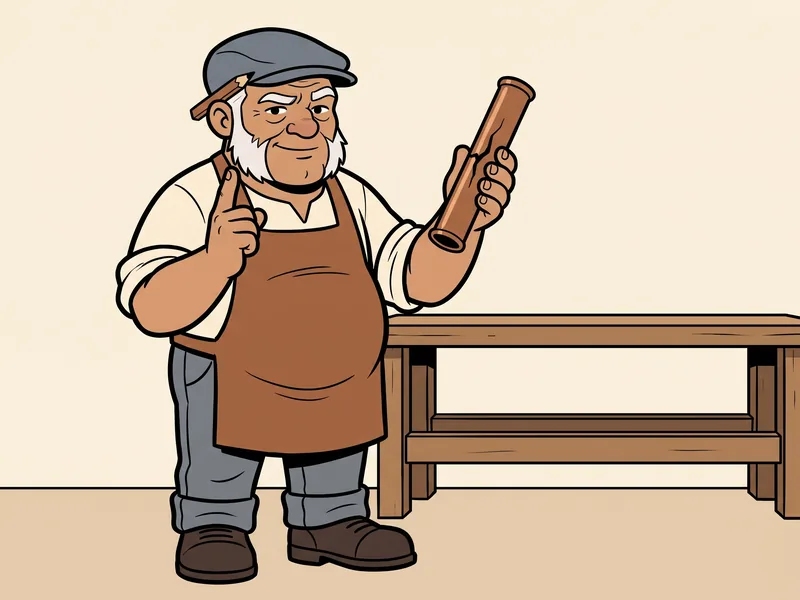
Panel 1. The Old Tradesman says: Cut out a short split you can reach and bridge it with push fittings. Water off at the main and drained first.
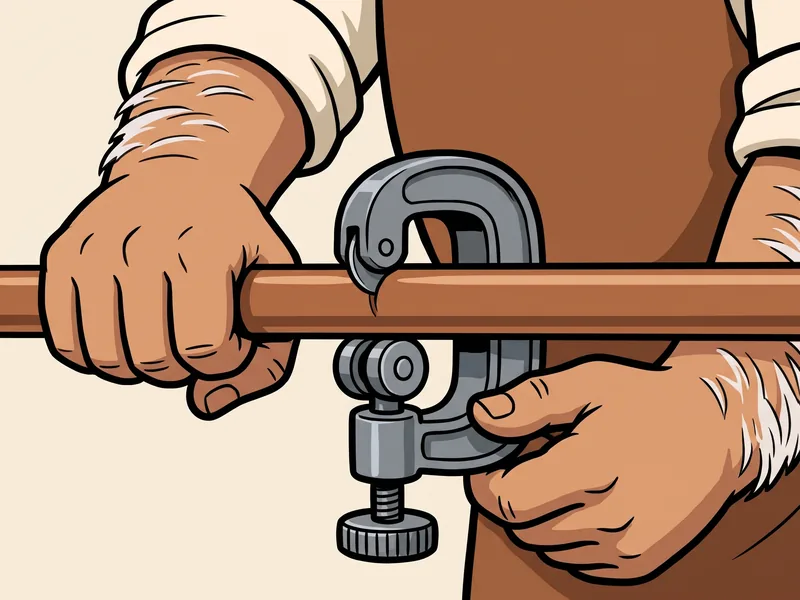
Panel 2. The Old Tradesman says: Copper gets a tubing cutter. Snug the knob a quarter to half turn, go around, snug again.
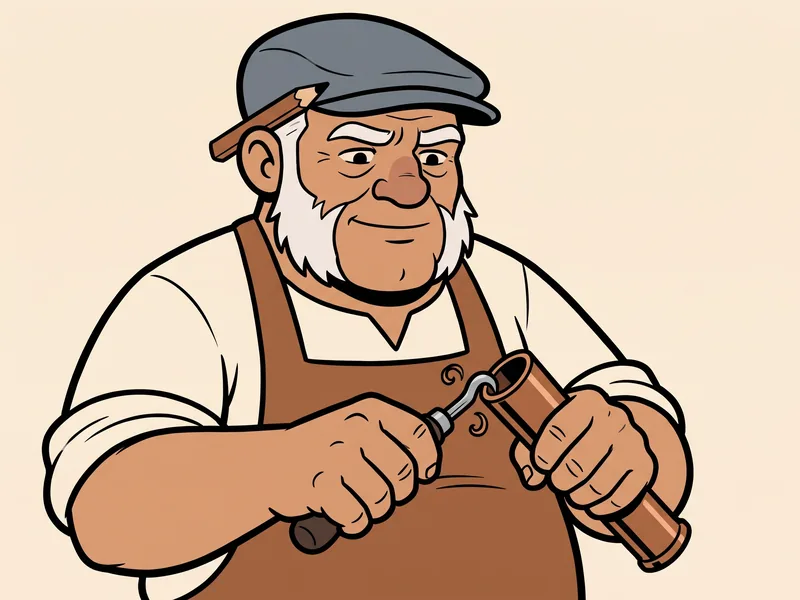
Panel 3. The Old Tradesman says: Ream the inside, chamfer the outside. A burr can cut the O-ring on the way in.
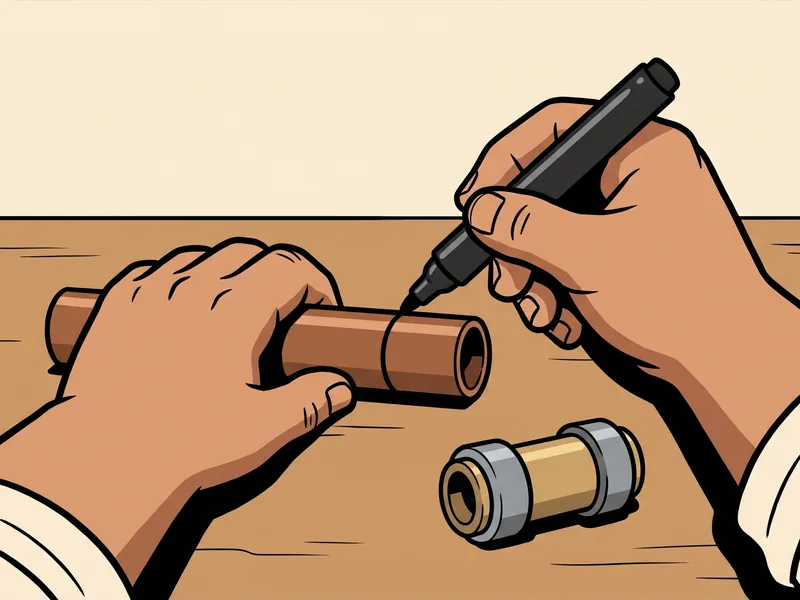
Panel 4. The Old Tradesman says: Mark the depth with the maker's gauge. Depths differ from one line to the next.
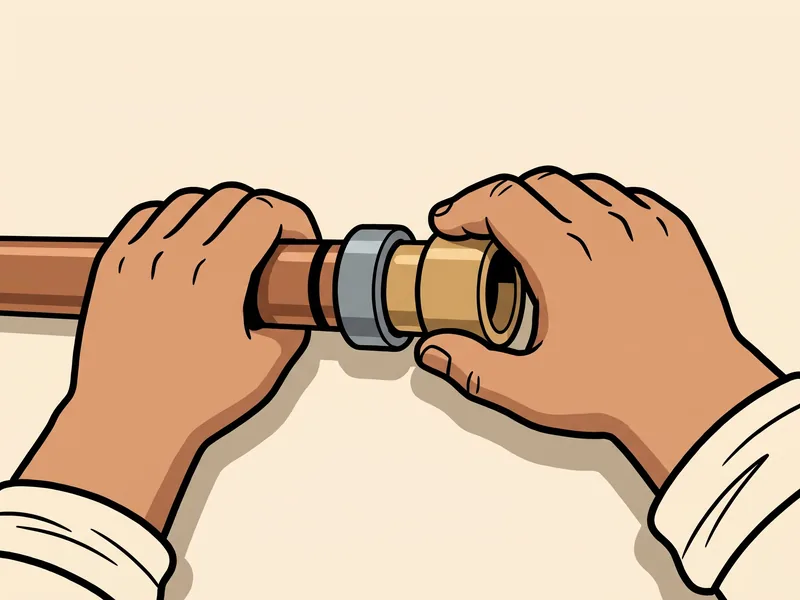
Panel 5. The Old Tradesman says: Push until the mark meets the collar. Short of the mark is not in.
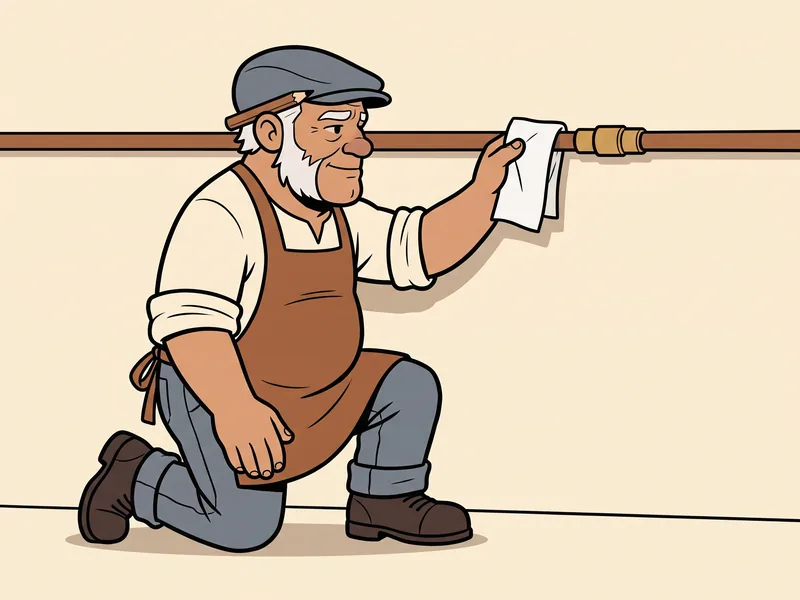
Panel 6. The Old Tradesman says: Water back on slowly. Check the joint for leaks. If it stays dry, so do I.
The note
A freeze can split a water line. When the split is short and the pipe is in reach, a push-to-connect coupling makes the repair. The fitting holds only as well as the pipe end you give it, and three things decide that: the cut, the burr and the depth. A plain coupling stops each pipe at its tube stop, so it will not slide over to close a gap. Cut out the split. On copper or CPVC, a slip coupling can close it: SharkBite’s distributor sheet says one repairs up to 2 inches of damaged pipe. Slip couplings are not for PEX. On any pipe on the fitting’s list, you can also use a short piece of new pipe and two couplings set at least 1 inch apart.
Bellevue’s utility says to close the main shut-off valve right away when a pipe breaks. With the main shut, open a faucet to drain the line before you cut. Bellevue also says a break may only show once a frozen pipe thaws, and both cities say never to thaw a pipe with an open flame. Toronto says that once the pipes have thawed, you turn the water back on slowly and check for cracks and leaks. So thaw first and find every split before you cut.
Know your pipe. SharkBite’s guide says its fittings can only be used with copper, PEX, CPVC, PE-RT and HDPE made to the standards it names. It says they should not go on galvanized pipe.
Cut it square. The maker says to use a rotary cutter on copper and pipe shears on plastic. With a tubing cutter, Reed says to tighten the knob a quarter to a half turn after the wheel touches, then again each turn until it is through. CPVC in a cold garage is its own case: Wavin says never to use a ratchet cutter below 50 degrees F. Wavin says to cut with a pipe cutter or a fine tooth saw, keep a saw cut square, and cut off at least two inches beyond any visible damage or cracking.
Deburr it. A sharp edge can damage the O-ring as the pipe goes in. The Copper Development Association says ream the inside and chamfer the outside. SharkBite wants the end round and free of scratches, cuts or gouges. If it is marked up, cut back to clean pipe.
Mark the depth with the maker’s gauge and a permanent marker, push on until the mark reaches the release collar, then turn the water on slowly and look for leaks. Depths differ from one fitting line to the next, so use the gauge or the sheet for the fitting in your hand. SharkBite says PEX, PE-RT and HDPE need a PEX stiffener. Its Universal fittings from 3/8 to 1 inch have one built in, and its 1-1/4 to 2 inch fittings need one bought separately for PEX.
References
- SharkBite (RWC), SharkBite Universal Installation Guide (distributor-hosted copy)
- SharkBite (RWC), SharkBite Max Installation Guide (distributor-hosted copy)
- SharkBite (RWC), End Cap Push-to-Connect data sheet
- Cash Acme (RWC), EB45 pressure regulating valve instructions, push-fit connection steps (retailer-hosted copy)
- Copper Development Association, Copper Tube Handbook: Push-connect Joints
- Reed Manufacturing, Quick Release Tubing Cutters operating instructions (distributor-hosted copy)
- Wavin, FlowGuard Gold CPVC Installation Guide
- City of Bellevue Utilities, Prevent frozen pipes, and if one breaks
- City of Toronto, Prevent or Thaw Frozen Pipes
- SharkBite (RWC), U3016LF slip coupling (distributor page)
The technique in this note comes from these sources. He is the voice. They are the authority. The panels are cartoons, not photographs.