Bench note No. 8

Hand Tight Means Hand Tight
The plastic nuts on a toilet by the makers' sheets: fingers only on the fill valve lock nut and the supply coupling nut, 1/2 turn on the metal end, and what a cranked nut can do.

Panel 1. The Old Tradesman says: Plastic nut on a toilet? Fingers. Fluidmaster and Korky print it for the fill valve nut, and TOTO for the supply nut: hand tight. That wrench stays on the bench.

Panel 2. The Old Tradesman says: Fill valve lock nut, under the tank. Push down on the shank, not the top, and run the nut up by hand. Fluidmaster's 400A sheet: hand tighten only, or the tank may crack. Leaks with the water on? A quarter turn more, dry it, check again.

Panel 3. The Old Tradesman says: Connector to the shank: no tape, no dope. TOTO says finger tight and keep the wrench off, or you can damage the plastic threads. Fluidmaster's Click Seal nut clicks when it's sealed. Its spec sheet lists a torque rating of 15 to 20 inch-pounds. Fingers, not a wrench.
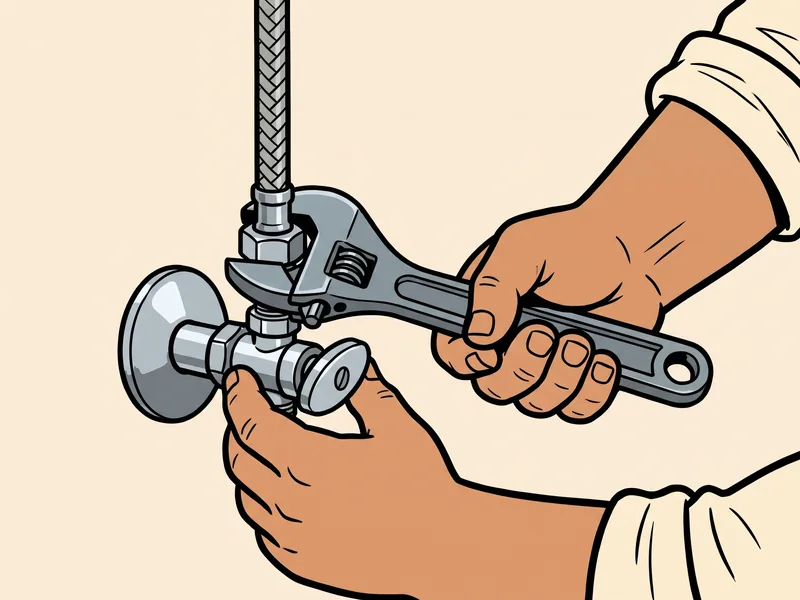
Panel 4. The Old Tradesman says: The metal nut on the shutoff is the one that gets a wrench: hand tight, then 1/2 turn, by Fluidmaster's connector sheet. Then stop. Fluidmaster says don't overtighten the shutoff either.

Panel 5. The Old Tradesman says: This is what can happen to plastic. Fluidmaster says an overtightened lock nut or coupling nut can break and cause a flood. And they don't always go on day one: a forensics firm that works these claims told CTV the failures typically come one to five years after install. Cheap, porous nuts, and in some cases cranked ones.
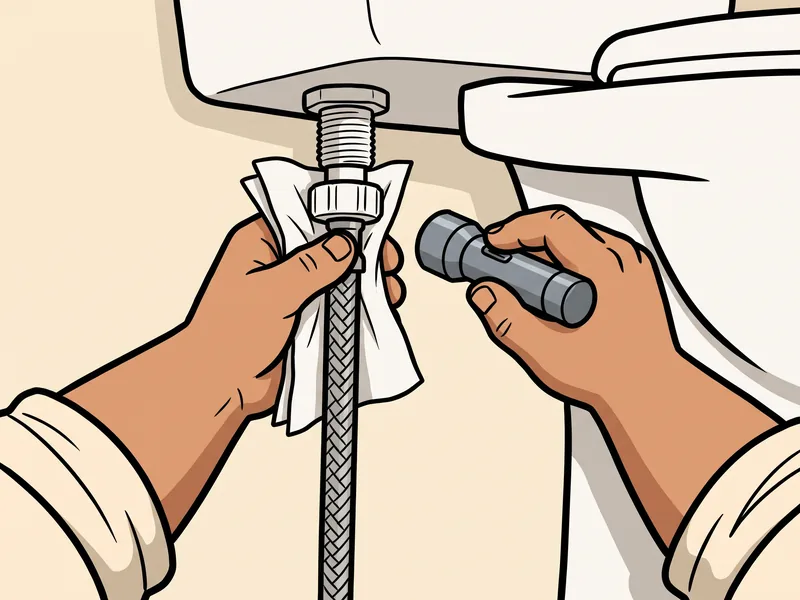
Panel 6. The Old Tradesman says: Water on, then dry the joint and hold a dry towel to it. Wet? Fluidmaster says turn the coupling nut just enough to stop it. Still wet? Water off. Fluidmaster says a reused coupling nut or cone washer can leak, and a connector that's worn or over five years old gets replaced.
The note
Two plastic nuts hold a toilet’s water. The lock nut clamps the fill valve to the tank from underneath. The coupling nut on the supply connector threads onto the fill valve shank just below it. Fluidmaster’s and Korky’s sheets say hand tight on both. TOTO’s says hand tight on the supply nut. Fluidmaster’s 400A sheet says hand tighten only and do not overtighten, or the tank may crack. Its PerforMAX sheet says hand-tighten only. Korky’s QuietFILL sheet says hand tighten the mounting nut, beveled side up. TOTO’s says tighten it and do not over-tighten. Water off at the stop before any of it.
The reason is what those nuts are made of and what they hold on to: a plastic nut, a plastic shank and a china tank. Fluidmaster’s 400A sheet warns that overtightening the lock nut or the coupling nut could result in breakage and potential flooding, and that overtightened nuts can crack the tank or bowl. Its repair kit sheet says overtightening may crack the fill valve or the tank.
On the lock nut, Fluidmaster says push down on the valve shank, not the top, while you tighten it. If it leaks once the water is on, the 400A sheet allows 1/4 turn more, then dry it and check again. That quarter turn, after a leak, is the only extra any sheet behind this note gives that nut. Korky says you may need an adjustable wrench to get the old nut off, and its warranty does not cover over-tightening of the mounting nut. Going on, it says hand tighten only.
On the coupling nut, TOTO’s sheet says finger tight, and to avoid using a wrench because you may damage the plastic threads. TOTO says never use pipe dope on any water supply connection; Korky says no sealant or tape; the PlumbShop connector sheet says no seal tape or joint compound. Fluidmaster’s PerforMAX sheet says turn the coupling nut clockwise by hand until tight, and if it leaks at the bottom of the tank, turn it just enough to stop the leak. Fluidmaster’s Click Seal nut clicks when the connector has a proper seal, and its spec sheet lists a torque rating of 15 to 20 inch-pounds. The sheet does not say that number is the click. Not every sheet agrees. Family Handyman says hand tighten a supply connector, then an extra half turn, and it tells you to buy connectors with metal or reinforced plastic nuts. Mercury Plastics’ Merflex sheet says firmly hand tight, then, if needed, a quarter to half turn with a wrench on its own plastic nuts. The sheet in the box with your connector and your fill valve wins, and on a toilet the fill valve makers say fingers.
The other end of the connector is metal on a metal valve. Fluidmaster’s Click Seal sheet says tighten that nut 1/2 turn beyond hand tight, and do not overtighten the shutoff valve. Merflex gives its metal nuts one more turn with a wrench after hand tight, and the PlumbShop sheet just says use a wrench. The sheet with your connector wins. The stop valve has numbers of its own, in Two Wrenches, Then Count the Turns.
Here is how a failed plastic nut goes. Cozen O’Connor, in a law firm’s slide deck on recovery, describes failed plastic coupling nuts as fractured all the way around, with the fracture starting at the root at the base of the nut. The deck blames design defects, and says the makers point to overtightening and to tool marks found on the coupling nut. Giffin Koerth, a forensics firm investigating these cases for the insurance industry, told CTV News the failures typically come one to five years after installation, that the nuts were often low grade and porous, and that in some cases they may also have been overtightened. So read the nut: wrench or plier bites on a plastic nut mean a tool was on it, and the makers point to marks like that. A Connecticut Insurance Department handout, citing an IBHS study, puts toilet water damage at $2,000 to $10,000 an incident, says 78 percent of incidents came from faulty supply lines, toilet flanges, fill valve assemblies or toilets that backed up and overflowed, and says to inspect the supply line every 6 months.
When a fill valve gets replaced, look hard at the connector too. Fluidmaster says replace the supply connector if it is worn or over 5 years old, because it is under pressure, and its 400A sheet says reusing the old coupling nut or cone washer may result in leaks. That sheet also says captive cone washers are already included, so no additional washers, and never use a cone washer with a plastic supply line. This rule hangs with the small ones on the shop rules wall, and the rest of the toilet, flange to chain, is in Setting a toilet.
References
- Fluidmaster, 400A Fill Valve installation instructions (Part 4-743)
- Fluidmaster, 400A Fill Valve instructions (HD Supply copy)
- Fluidmaster, PerforMAX Fill Valve instructions
- Fluidmaster, 400AKC Toilet Repair Kit instructions
- Fluidmaster, Click Seal toilet connector instructions and specifications
- Korky, 528 QuietFILL fill valve instructions
- TOTO, C244EF installation instructions
- Masco Canada, PlumbShop PS6104 toilet connector instructions
- Mercury Plastics, Merflex faucet and toilet connector installation instructions
- Family Handyman, How to Tighten Water Supply Line Connectors
- Cozen O'Connor, Water Connector and Toilet Valve Failures
- CTV News, Pat Foran on faulty toilet hoses causing destruction
- Connecticut Insurance Department, Water damage prevention handout (citing IBHS)
The technique in this note comes from these sources. He is the voice. They are the authority. The panels are cartoons, not photographs.