Bench note No. 2

Two Wrenches, Always
How to loosen or tighten a fitting without twisting the pipe behind it.
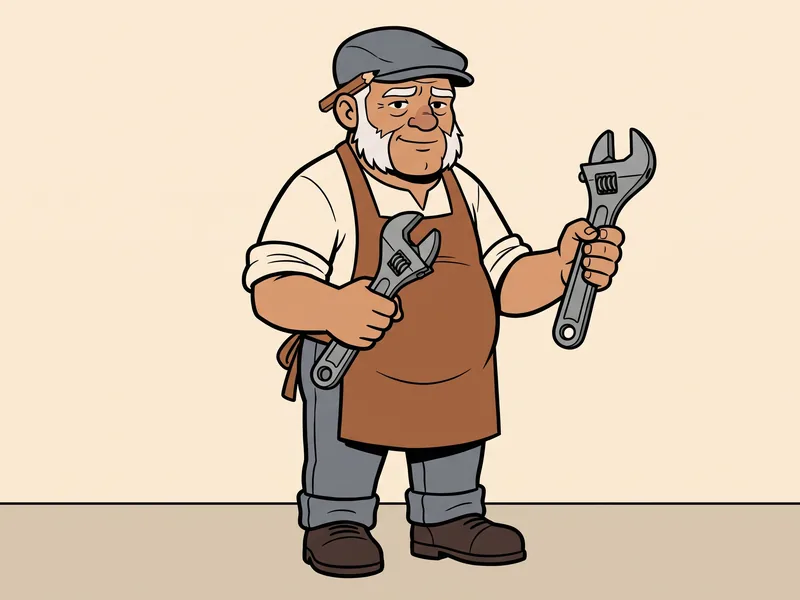
Panel 1. The Old Tradesman says: Two wrenches. Always. One holds, one turns.
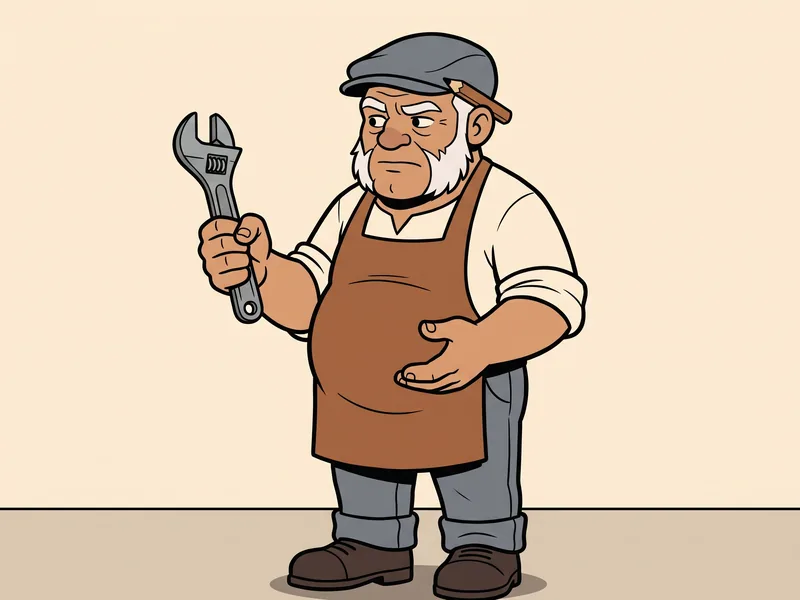
Panel 2. The Old Tradesman says: Use one, and the pipe does the holding. Pipes are bad at it.
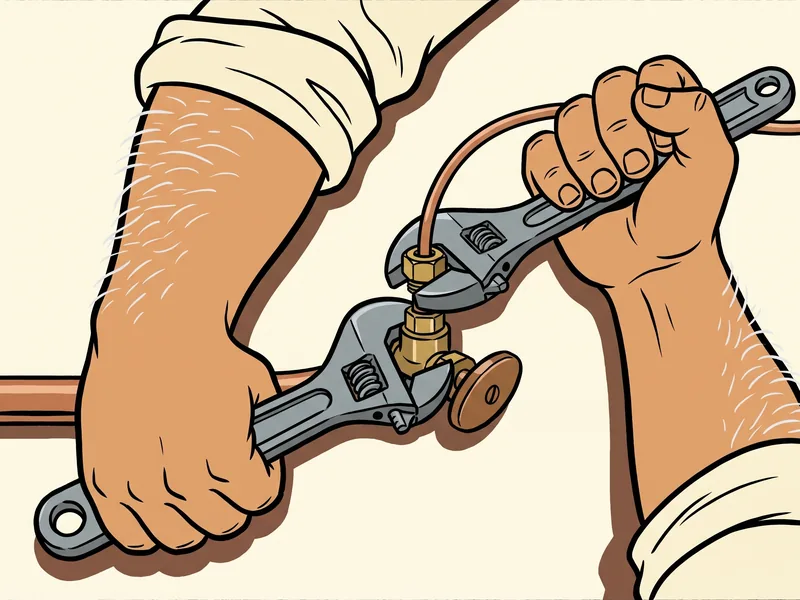
Panel 3. The Old Tradesman says: This hand holds the valve body still. That hand turns the nut. The valve does not move, so nothing behind it does either.

Panel 4. The Old Tradesman says: Snug, then stop. On a BrassCraft compression stop, the inlet nut gets three quarters of a turn past hand tight. Other nuts and other makes differ. Crank past the number and you crush the ferrule.
The note
My rule: if one wrench is turning something, another wrench is holding what it is attached to. The second one is called a backup wrench, and it is the cheapest insurance in the box.
Before you loosen any fitting, shut off the water that feeds it and open a faucet to let the pressure out.
Here is why. When you lean on a nut, the force does not stay at the nut. Family Handyman says it can cause leaks in other parts of the valve or in the pipe connections, and the joint that lets go may be one you cannot see. Hold the valve body with an adjustable or open-end wrench and the twist stops right there. Swagelok says the same for its tube fittings: hold the fitting body steady with a backup wrench. Delta prints it on its faucet instructions: use two wrenches when tightening, and do not overtighten.
Pick the right wrenches. Smooth jaws go on hex nuts and chrome, and an adjustable wrench will not chew them up. Close the jaws snug on the flats and pull so the load lands on the fixed jaw. A pipe wrench is for round pipe. Ridgid says not to put one on a hex or a square, and Ridgid makes the pipe wrench.
Then stop when it is tight. BrassCraft’s sheet for its compression stops says three quarters of a turn past hand tight on the inlet nut, gives different numbers for the outlet nut, and says not to overtighten. Go past that and you can deform the ferrule and make the leak worse. Some nuts want no wrench at all. The plastic coupling nut on a Fluidmaster fill valve is hand tight only, and the sheet says so in capital letters.
Read the sheet that came with the part. It is one page. You will live.
References
- Family Handyman, How to Replace a Shutoff Valve
- Family Handyman, Leaky Shut-Off Valve? Here's How to Fix It
- Swagelok, An Installer's Pocket Guide for Swagelok Tube Fittings (university-hosted copy)
- Delta Faucet, Single handle kitchen faucet installation instructions (distributor-hosted copy)
- Fine Homebuilding, Essential Plumbing Tools
- This Old House, How To Use an Adjustable Wrench for Your Next Project
- Ridgid, Pipe Wrench Use Guide (distributor-hosted copy)
- BrassCraft, Water Supply Stops Installation Instructions
- This Old House, Adding Sink Shutoff Valves: A DIY Guide
- Fluidmaster, 400A Fill Valve Installation Instructions (distributor-hosted copy)
The technique in this note comes from these sources. He is the voice. They are the authority. The panels are cartoons, not photographs.